Static vs animated banner ads present a fascinating dichotomy in the world of digital marketing. On one hand, static ads offer simplicity and clarity, while animated ads boast the potential for higher engagement through motion and creativity. This exploration will dive into the fundamental differences between these two types of ads, their unique advantages and disadvantages, and where each can shine in the competitive landscape of online advertising.
As we navigate through the realm of banner ads, it’s essential to recognize how they not only enhance brand visibility but also influence user interaction and traffic flow to websites. Understanding the strategic roles of static and animated ads can significantly impact marketing outcomes, especially when integrated into various platforms like blogs and e-commerce sites.
Understanding Static vs Animated Banner Ads
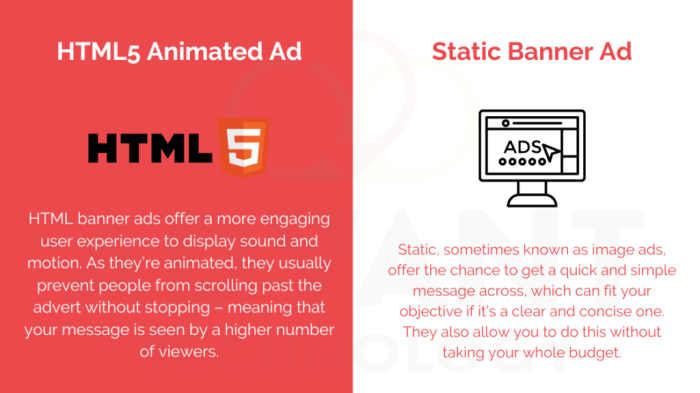
Static and animated banner ads are two pivotal formats in the realm of digital advertising, each with unique characteristics and implications for engagement. Understanding these differences can greatly influence advertising strategies and overall effectiveness. Static banner ads are simple, consisting of a single image or graphic without any movement, delivering a straightforward message. In contrast, animated banner ads incorporate motion elements, allowing for a dynamic presentation that can capture viewer attention in a more engaging manner.The fundamental differences between static and animated banner ads lie in their design and interaction potential.
Static ads tend to be less intrusive and can be easily absorbed at a glance, while animated ads draw attention through movement and can convey more information quickly. Animated ads often consist of a series of frames or slides that create a short visual story, enhancing engagement by encouraging users to watch the animation unfold.
Advantages and Disadvantages of Static Banner Ads
Static banner ads have their own set of advantages and disadvantages that impact their effectiveness in various scenarios. Here are the key points to consider:
- Advantages:
- Quick Loading: Static ads load faster than animated ads, making them ideal for users with slow internet connections.
- Simplicity: They present a clear and straightforward message, reducing the risk of overwhelming viewers.
- Cost-Effective: Generally, static ads are less expensive to produce compared to animated versions.
- Disadvantages:
- Limited Engagement: Static ads lack the dynamic elements that can attract and hold user attention for longer periods.
- Less Information: They may not convey complex messages or narratives as effectively as animated ads.
- Potential for Overshadowing: In environments crowded with animated content, static ads may blend in and become less noticeable.
Circumstances Favoring Animated Banner Ads
Animated banner ads have an edge in specific contexts where engagement and storytelling are crucial. Certain situations where animated ads outperform static ones include:
- Brand Storytelling: Animated ads excel at telling a brand’s story through sequences of visuals, making them compelling tools for emotional engagement and brand recall.
- Complex Messages: When there’s a need to convey multiple features or benefits, animations can effectively communicate this information in an easily digestible format.
- Immediate Attention Grabbing: The movement inherent in animated ads is often more effective at capturing initial viewer interest, particularly in busy online environments.
In conclusion, both static and animated banner ads have their respective strengths and weaknesses. The choice between them depends on the specific goals of the advertising strategy, the target audience, and the nature of the message being conveyed.
Impact of Banner Ads on Internet Marketing
Banner ads have emerged as a cornerstone of internet marketing, playing a vital role in enhancing brand visibility and user interaction. With the digital landscape constantly evolving, understanding the impact of these ads can significantly influence marketing strategies. Their ability to catch the eye and convey messages succinctly contributes to their effectiveness in promoting products and services, ultimately driving traffic and conversions.
Influence on Brand Awareness and User Engagement
Banner ads are pivotal in shaping brand awareness and fostering user engagement. When strategically placed on popular websites, these ads can create immediate visibility for brands, reaching vast audiences quickly. The effectiveness of banner ads can be amplified through targeted placement, ensuring that they are seen by users who are more likely to be interested in the associated products or services.
“Effective banner advertising can increase brand recall by 46%.”
Static banner ads serve as a simple yet effective means for brand recognition, often using striking visuals and concise messaging that resonates with the audience. However, animated banner ads can offer additional benefits by incorporating dynamic elements that attract attention and encourage interaction. This increase in engagement can lead to higher click-through rates, as users are more likely to interact with ads that are visually stimulating.
Effectiveness of Static vs Animated Ads in Driving Traffic
The choice between static and animated banner ads can greatly affect traffic generation to websites. Static ads, while simpler, often convey messages clearly and directly, making them ideal for straightforward promotions. They load faster, which can be critical in maintaining user experience and reducing bounce rates. On the other hand, animated ads can tell a story or demonstrate a product through visuals, potentially leading to higher user engagement.
The animation can capture attention more effectively, but it must be balanced to avoid overwhelming users.
“Animated ads can improve user engagement rates by up to 30% compared to static ads.”
The effectiveness of these ad types can be measured through various metrics, including click-through rates and conversion rates. For instance, a digital marketing campaign that utilized animated banner ads saw a 25% increase in website visits, illustrating the potential of dynamic content.
Role in Email Marketing Campaigns
Banner ads also play a crucial role within email marketing campaigns, influencing open rates and overall effectiveness. Incorporating a well-designed banner ad into an email can not only enhance the visual appeal but also provide a clear call to action for recipients. Research shows that emails including banner ads can experience higher engagement rates. When a banner ad is placed prominently, it can drive traffic to the website and encourage recipients to take desired actions, such as making a purchase or signing up for a newsletter.
“Emails with banner ads see a 20% greater click-through rate than those without.”
Incorporating banner ads into email marketing strategies can significantly enhance the campaign’s success. Well-crafted banner ads can be the difference between a passively viewed email and a compelling invitation to explore what a brand has to offer. As such, the strategic use of banner ads in emails should be considered essential for maximizing user engagement and driving conversions.
Designing Effective Banner Ads
Creating visually appealing and effective banner ads is crucial for capturing audience attention and driving conversions. The design of a banner ad can significantly influence user engagement, thus understanding the principles of effective design is essential for marketers and advertisers alike.
Guidelines for Designing Visually Appealing Static Banner Ads
A well-designed static banner ad should convey its message quickly and attractively. Here are key guidelines to follow:
Simplicity is Key
Use a clean design with ample white space to avoid clutter. Focus on one primary message to ensure clarity.
Eye-catching Colors
Select colors that align with your brand while also standing out on the webpage. High contrast colors can help draw attention to key elements like calls to action.
Readable Fonts
Choose easily legible fonts. Ensure that the text size is large enough to be read at a distance and that the font style reflects your brand’s personality.
Strong Imagery
Incorporate compelling images or graphics that relate to your message. The visuals should complement the text rather than overpower it.
Clear Call to Action
Include a prominent and concise call to action (CTA) that prompts users to take the desired action, such as “Shop Now” or “Learn More”.
Animating Banner Ads for Maximum Impact
Animation can enhance the engagement of banner ads when used effectively. Here’s how to animate without overwhelming the viewer:
Subtle Transitions
Implement gentle animations that don’t distract from the main message. For instance, fading in text or images can add a dynamic touch without being intrusive.
Limit Animation Duration
Keep animations brief. A good rule of thumb is to maintain each animated element’s visibility for at least 3-5 seconds to give viewers time to absorb the content.
Focus on Key Elements
Animate critical components like the call to action or promotional offers. This directs attention precisely where you want it.
Loop Sparingly
If the animation loops, ensure it does so smoothly without repeating too frequently, which can be distracting or annoying.
Test for Performance
A/B testing different animated versions can help determine which style resonates best with your audience, ensuring effectiveness.
Best Practices for Integrating Banner Ads into Online Platforms
Integrating banner ads effectively across different online platforms requires strategic considerations. Here are best practices to follow:
Align with Platform Aesthetics
Ensure that the banner ad design complements the platform’s visual style. For example, a banner on a blog should feel in harmony with the overall site layout.
Responsive Design
Create responsive banners that adapt to various screen sizes and orientations, providing an optimal viewing experience across devices.
Ad Placement Strategy
Position banner ads where they are most likely to be seen. Common placements include above the fold on websites or in between content on blogs.
Utilize Targeting Options
Take advantage of targeting features on platforms like social media and Google Ads to reach specific demographics or audience segments.
Monitor Performance
Regularly track the performance of banner ads using analytics tools. This allows for adjustments based on click-through rates, conversion rates, and user engagement metrics.
Effective banner ads are not just about aesthetics; they are strategically designed to capture attention and convert viewers into customers.
Final Review
In summary, the choice between static and animated banner ads hinges on understanding their distinct characteristics and the specific goals of your marketing campaign. While both have their merits, leveraging them effectively can lead to increased engagement and traffic, ultimately driving the success of your online marketing efforts. Remember, whether you opt for the straightforward approach of static ads or the dynamic allure of animated ones, the key lies in striking the right balance for your audience.
Essential FAQs
What are static banner ads?
Static banner ads are non-moving advertisements that display a single image or message, focusing on clarity and straightforward communication.
What are animated banner ads?
Animated banner ads use motion and visual effects to attract attention, often consisting of multiple frames or transitions to engage viewers.
Which type of banner ad is more effective?
The effectiveness of static vs animated ads largely depends on the campaign goals and target audience; animated ads typically perform better in engagement but may distract some users.
Can I use both static and animated ads in my campaign?
Absolutely! Using a combination of both can cater to different viewer preferences and enhance overall campaign effectiveness.
How do banner ads impact brand awareness?
Both static and animated banner ads can significantly boost brand awareness by repeatedly exposing users to branding elements, increasing recall and recognition.